Transaction Platforms Driving Layered Incentives in Games Merging Live Dealers with Reel Mechanics
Written by Iris Berger · Sep 4, 2026
Transaction Platforms Driving Layered Incentives in Games Merging Live Dealers with Reel Mechanics
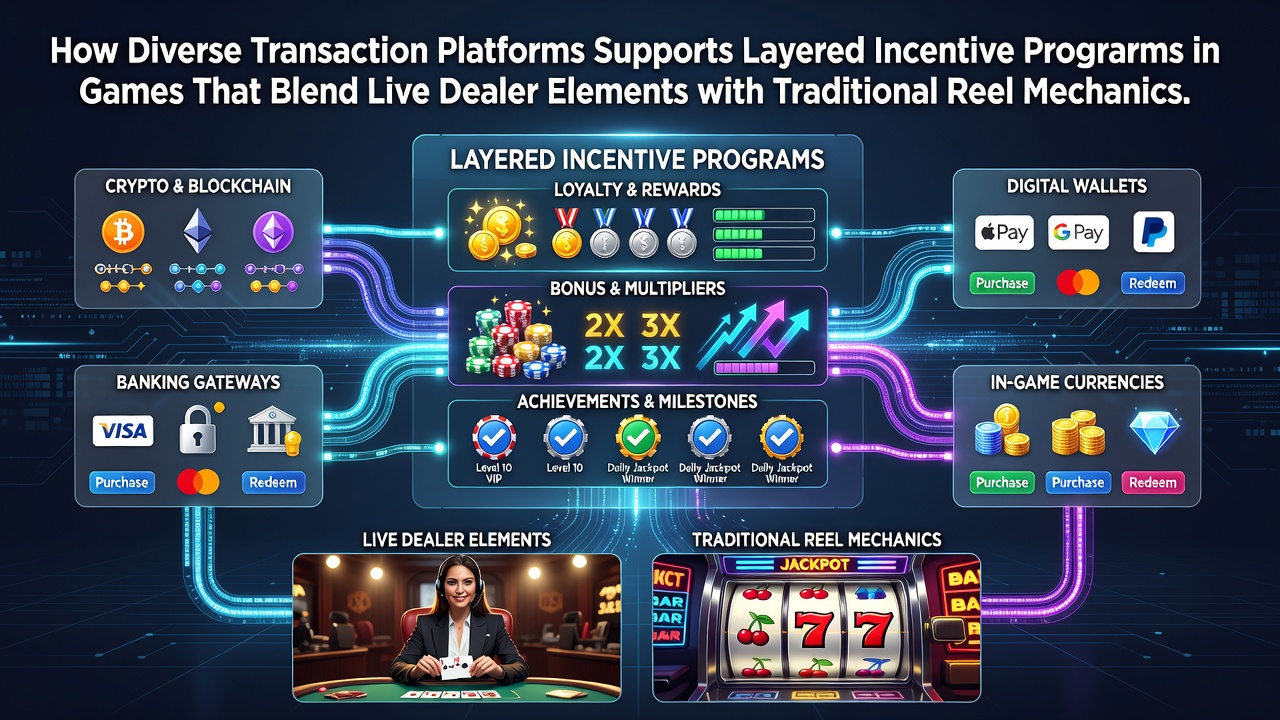
Hybrid games that combine live dealer interactions with traditional reel mechanics have expanded across regulated markets, and transaction platforms now form the backbone for delivering multi-tiered incentive programs within these titles. Payment providers process deposits and withdrawals while simultaneously triggering rewards that scale according to player activity, game type, and transaction method chosen. Operators integrate these systems so that instant bank transfers, digital wallets, and card networks each unlock distinct bonus pathways that accumulate across both live table segments and automated reel spins.
Payment Diversity and Incentive Layer Construction
Multiple transaction rails operate in parallel within the same game environment, allowing operators to assign different reward multipliers or eligibility criteria based on funding source. Digital wallets often feed into the base incentive layer by crediting free spins after the first deposit, while bank transfers activate higher-tier progressive contributions during live dealer rounds. Card networks support separate VIP point accrual that carries over when players switch between reel sequences and real-time table play. Data from the Nevada Gaming Control Board indicates that platforms supporting at least three distinct payment categories recorded higher average transaction volumes during the first half of 2026, particularly in titles that blend live elements with reel cycles.
Layered programs typically structure rewards in progressive bands. The entry band activates upon any qualifying deposit and grants immediate reel-based free spins. Mid-level bands unlock when cumulative spend through preferred methods reaches defined thresholds, releasing live dealer bonus rounds or enhanced reel multipliers. Top bands tie directly to sustained volume across both game formats and often include cashback percentages that settle through the same transaction channel used for deposits. This structure encourages players to maintain activity in both live and reel components rather than favoring one exclusively.
Integration Mechanics Across Hybrid Titles
Developers embed application programming interfaces from payment processors directly into game servers so that transaction events trigger in-game events without leaving the session. A player completing a wallet deposit during a live dealer segment might receive an instant reel respin feature, while the same deposit processed through a bank transfer could allocate points toward a shared jackpot pool accessible in either mode. These connections operate in real time, updating player profiles across both live and automated elements simultaneously. Observers note that seamless synchronization reduces friction and keeps incentive eligibility visible throughout extended play sessions.
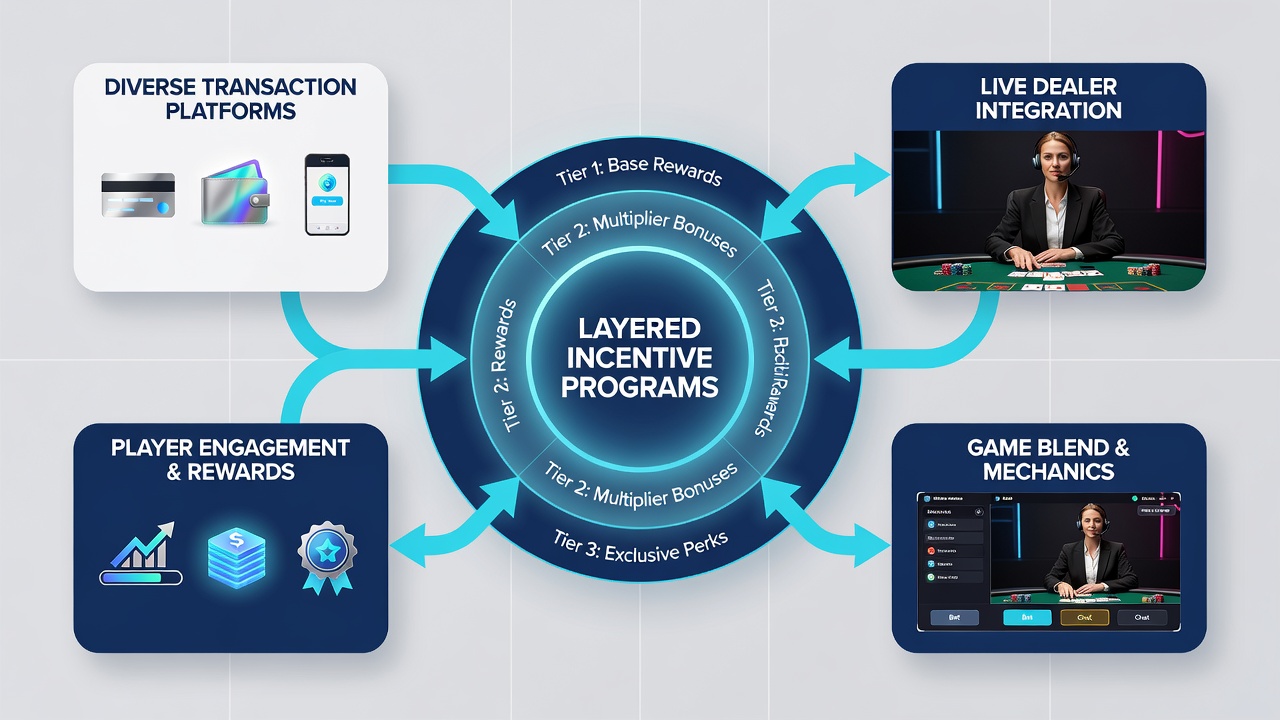
September 2026 brought several platform updates that expanded cross-format reward tracking. Processors introduced unified ledgers that record activity from both live dealer tables and reel engines under single player accounts, enabling operators to apply consistent tier progression regardless of which mechanic dominates any given session. This update coincided with regulatory reviews in multiple jurisdictions examining how payment diversity influences responsible play measures within hybrid environments. Industry reports from the European Gaming and Betting Association highlight that unified tracking systems have improved transparency for both operators and oversight bodies by providing clearer audit trails for incentive distribution.
Regional Regulatory Influences on Platform Selection
Regulators in different regions shape which transaction platforms can participate in incentive delivery. In Canadian provinces, licensed operators must route certain reward types through approved financial institutions, which in turn affects how quickly layered bonuses reach player accounts during hybrid sessions. Australian state frameworks emphasize verification speed, prompting operators to prioritize processors that complete identity checks within the same flow that credits reel or live bonuses. These requirements create natural variation in available incentive layers depending on player location, yet the underlying mechanics remain consistent: transaction data feeds directly into reward eligibility calculations that span both game formats.
Case studies from operators using multi-rail systems show measurable differences in player retention when incentive layers align with preferred payment methods. One documented rollout in a North American market linked higher-tier reel multipliers to cryptocurrency deposits while routing live dealer cashback through traditional banking rails, resulting in balanced engagement across both mechanics. Researchers tracking these implementations report that players who engage with multiple payment options maintain longer session durations and distribute activity more evenly between live and reel components.
Conclusion
Diverse transaction platforms continue to underpin the delivery of layered incentive programs in games that merge live dealer elements with traditional reel mechanics. By connecting payment events to real-time reward triggers, operators maintain distinct bonus pathways that scale across both formats while satisfying regional compliance standards. As platforms evolve and regulatory environments shift, the technical integration between transaction rails and hybrid game servers determines how effectively layered incentives reach players and sustain engagement across live and automated play.