Currency Currents: Exploring How Banking Choices Influence Free Spin Allocations and Progressive Prize Pools
Written by Yves Baumann · Jul 9, 2026

Currency Currents: Exploring How Banking Choices Influence Free Spin Allocations and Progressive Prize Pools
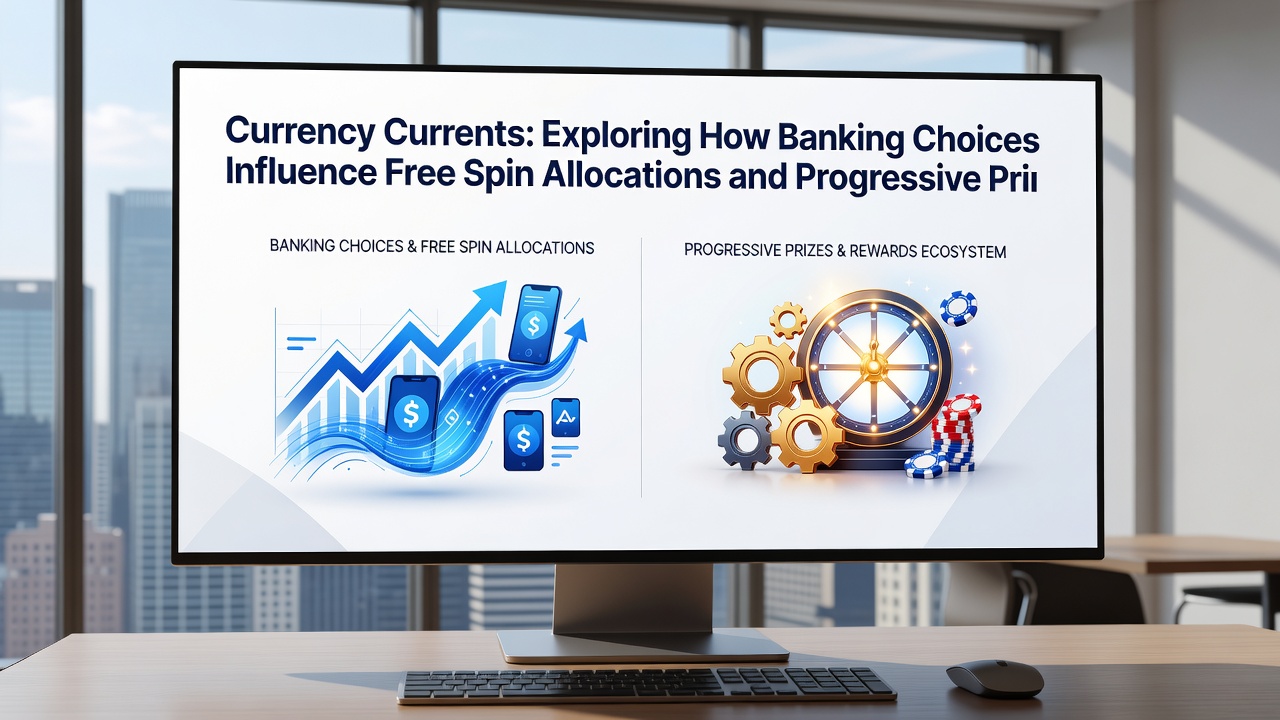
Banking selections shape how players access free spins and contribute to progressive prize pools across digital gaming platforms, with payment processing speeds, verification requirements, and fee structures directly affecting eligibility windows and contribution percentages. Operators track deposit origins through standardized protocols that determine whether funds qualify for promotional allocations, and these mechanics have grown more intricate as transaction volumes rose through mid-2026.
Payment Method Categories and Their Operational Mechanics
Credit and debit card transactions continue to dominate initial deposits because they integrate directly with banking networks that support rapid authorization, yet many platforms impose distinct bonus qualification rules for card-funded accounts compared with e-wallet or cryptocurrency transfers. E-wallets such as those offered by established providers often bypass traditional banking delays, which allows players to meet wagering thresholds sooner and unlock free spin bundles that carry time-sensitive activation codes.
Bank transfers and prepaid vouchers introduce longer settlement periods that can push deposits outside promotional calendars, causing operators to route those accounts into separate tracking systems where free spin awards appear only after clearance. Cryptocurrency options, meanwhile, provide near-instant confirmation on supported networks, and several platforms have adjusted their contribution formulas to reflect the lower processing costs associated with blockchain settlements.
Allocation Rules for Free Spins Tied to Deposit Sources
Platform algorithms evaluate deposit method alongside amount and frequency when distributing free spin packages, with data from July 2026 indicating that e-wallet users received higher average spin volumes per deposit cycle than card users in markets tracked by independent analytics firms. Verification layers attached to certain payment rails add extra review steps that delay bonus crediting, while instant-approval methods feed directly into automated reward engines.
Operators maintain internal ledgers that record the payment instrument used for each deposit, and these records determine whether a player’s activity counts toward free spin campaigns that require minimum deposit thresholds cleared within set windows. Studies from research institutions such as those affiliated with university gaming laboratories have documented how these categorization systems create measurable differences in player progression rates across payment cohorts.
Contribution Pathways to Progressive Prize Pools
Progressive jackpots accumulate through percentage-based deductions taken from qualifying wagers, and the banking method behind those wagers influences how quickly funds enter the pool because of settlement timing and risk scoring applied by payment processors. Card deposits, for instance, often carry merchant fees that platforms offset by adjusting contribution rates, whereas cryptocurrency transfers frequently bypass such deductions and allow fuller percentages to flow into the shared prize structure.
Regional regulatory frameworks in jurisdictions outside the United Kingdom further shape these dynamics, as evidenced by reporting from the Nevada Gaming Control Board that outlines how licensed operators must document payment sources when calculating jackpot contributions. Platforms that accept multiple currencies must also reconcile exchange rate fluctuations, which occasionally alters the effective contribution amount reaching the pool during cross-border transactions.
Observed Patterns Across Player Segments in 2026
Analytics compiled through the first half of 2026 reveal that players relying on instant payment rails triggered more frequent entries into progressive systems because their deposits cleared before daily reset thresholds, whereas slower methods required additional manual reconciliation that postponed eligibility. Loyalty programs layered on top of these systems sometimes award bonus multipliers based on payment consistency, creating feedback loops where preferred banking choices lead to accelerated spin allocations and larger pool participations.
One documented case involved a mid-sized operator that restructured its bonus engine after observing that cryptocurrency-funded accounts contributed 12 percent more to progressive meters per active session than traditional card accounts, prompting adjustments to free spin distribution schedules to balance overall engagement metrics. Such recalibrations demonstrate how payment data feeds directly into both promotional planning and prize pool management.
Conclusion
Banking choices therefore function as upstream variables that cascade through allocation engines and contribution formulas, producing measurable differences in free spin availability and progressive prize growth rates across platforms. Observers tracking these systems note that continued evolution in payment infrastructure will likely prompt further refinements in how operators segment rewards and manage pooled prize mechanics through the remainder of 2026 and beyond.